Phlebotomy Story - Order of Draw Stories — Part 1 - “The First Tubes”
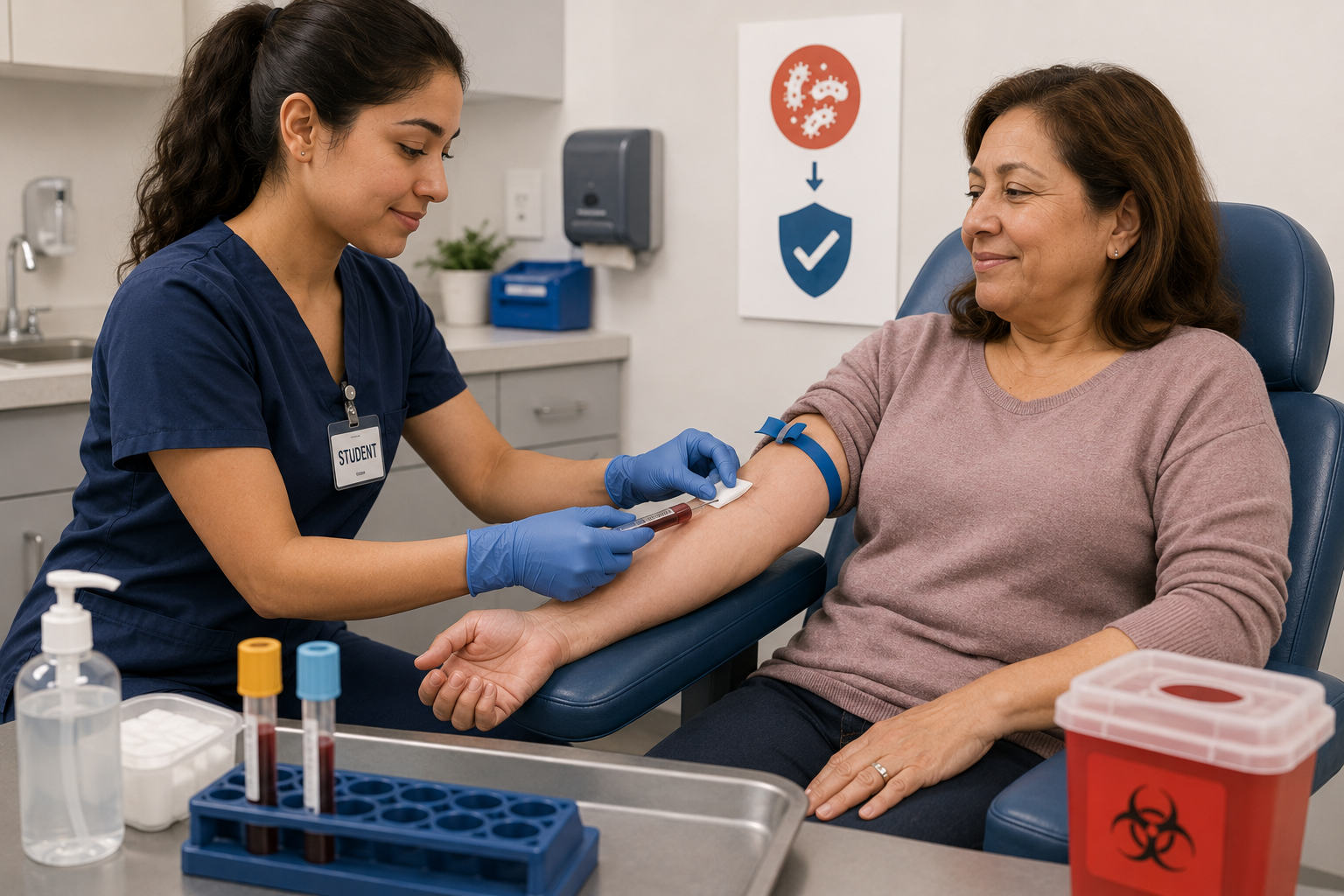
Characters
Kayla — phlebotomy student
Mrs. Ramirez — patient preparing for surgery
Kayla:
Good morning. My name is Kayla, and I’ll be drawing your blood today.
Mrs. Ramirez:
Morning. You seem calm.
Kayla:
I’m trying to be.
Mrs. Ramirez:
Trying?
Kayla:
Today my instructor is testing me on the order of draw.
Mrs. Ramirez:
That sounds serious.
Kayla:
It is. Different blood tubes contain different additives, so they must be collected in the correct order.
(Kayla washes her hands and puts on gloves.)
Mrs. Ramirez:
What happens if the order is wrong?
Kayla:
The additives from one tube can contaminate another tube and affect the laboratory results.
Mrs. Ramirez:
So the tests could become inaccurate?
Kayla:
Exactly.
(Kayla organizes the tubes carefully.)
Mrs. Ramirez:
Which tube comes first?
Kayla:
The blood culture tubes.
Mrs. Ramirez:
What are blood cultures?
Kayla:
They are tests that check for bacteria or other microorganisms in the blood.
Mrs. Ramirez:
So doctors use them to look for infection?
Kayla:
Yes. Serious infections in the bloodstream can become very dangerous, so the laboratory must collect the sample very carefully.
Mrs. Ramirez:
Why do blood cultures come first?
Kayla:
Because they must remain as sterile as possible.
Mrs. Ramirez:
What does sterile mean?
Kayla:
Sterile means free from germs or contamination.
Mrs. Ramirez:
So if another tube contaminated the blood culture tube, it could look like the patient has an infection even if they don’t?
Kayla:
Exactly. That’s one reason the order matters so much.
(Kayla places the tourniquet on the arm.)
Kayla:
This will feel a little tight.
Mrs. Ramirez:
That’s fine.
Kayla:
Can you make a fist for me?
(Mrs. Ramirez makes a fist.)
(Kayla palpates the vein.)
Mrs. Ramirez:
You really have to think about many things at once, don’t you?
Kayla:
We do. Safety, patient comfort, sterility, labeling, tube order…
Mrs. Ramirez:
And not dropping anything.
Kayla:
That too.
(Both laugh softly.)
(Kayla cleans the arm carefully.)
Kayla:
This alcohol will feel cold.
Mrs. Ramirez:
Definitely cold.
Kayla:
For blood cultures, cleaning the site correctly is especially important because we don’t want bacteria from the skin entering the sample.
(Kayla prepares the needle.)
Kayla:
Small pinch.
(She performs the venipuncture successfully.)
Mrs. Ramirez:
That wasn’t bad.
Kayla:
Good.
(Blood begins flowing into the blood culture tube.)
Mrs. Ramirez:
What tube comes after blood cultures?
Kayla:
The light blue tube.
(Kayla switches tubes.)
Mrs. Ramirez:
What’s special about that one?
Kayla:
The light blue tube contains an additive called sodium citrate.
Mrs. Ramirez:
What does sodium citrate do?
Kayla:
It helps prevent the blood from clotting too quickly.
Mrs. Ramirez:
Why would doctors want blood not to clot?
Kayla:
Because some laboratory tests need to measure how clotting works.
Mrs. Ramirez:
What kinds of tests?
Kayla:
Tests like PT and INR.
Mrs. Ramirez:
I’ve heard of INR before. My brother takes blood thinners.
Kayla:
Exactly. INR tests are often used for patients taking anticoagulant medication.
Mrs. Ramirez:
What does anticoagulant mean?
Kayla:
An anticoagulant is a medication that helps prevent dangerous blood clots.
Mrs. Ramirez:
So doctors need to measure clotting carefully for those patients?
Kayla:
Yes. If blood clots too easily, it can cause problems like strokes or blocked blood vessels. But if blood does not clot enough, patients can bleed too much.
Mrs. Ramirez:
So the body needs balance.
Kayla:
Exactly.
(Kayla gently inverts the light blue tube.)
Mrs. Ramirez:
Why are you turning the tube upside down?
Kayla:
I’m mixing the blood gently with the sodium citrate additive.
Mrs. Ramirez:
Why gently?
Kayla:
Because shaking the tube too hard can damage blood cells and affect test results.
Mrs. Ramirez:
You know, before today I thought phlebotomy was just putting blood into tubes.
Kayla:
Most people think that.
Mrs. Ramirez:
But there’s a lot of science behind every step.
Kayla:
There really is.
(Kayla finishes the draw.)
Kayla:
Alright, I’m releasing the tourniquet now.
(She removes the needle and places gauze on the site.)
Kayla:
Please hold pressure here.
Mrs. Ramirez:
Like this?
Kayla:
Perfect.
(Kayla activates the safety device and places the needle into the sharps container.)
Mrs. Ramirez:
So today you practiced:
blood cultures,
sterility,
and the light blue tube?
Kayla:
Exactly.
Mrs. Ramirez:
And next comes more tubes?
Kayla:
A lot more tubes.
Mrs. Ramirez:
Sounds like you’ll be busy studying tonight.
Kayla:
Very busy.
Mrs. Ramirez:
Well, you’re doing well so far.
(Kayla smiles.)
Kayla:
Thank you. That actually helps.